

99.991 %
Historical Uptime

100 Gbps+
Network Capacity

15B +
Requests Processed Monthly

24/7/365
Network Monitoring

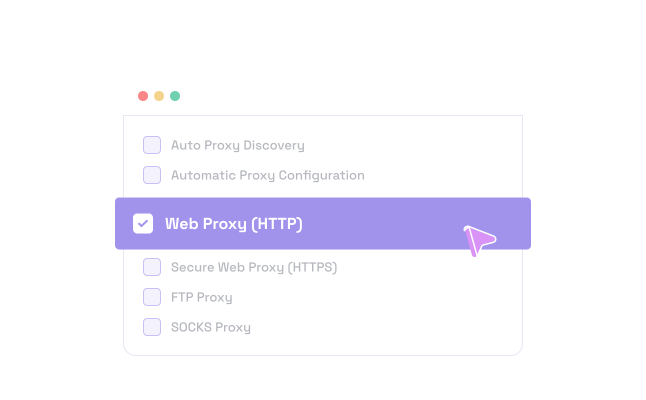
What is HTTP?

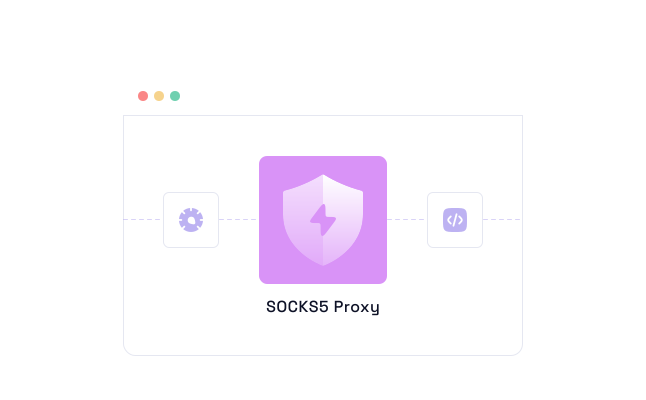
What is SOCKS5?
Why Choose Byteful?


HTTP/SOCKS5 proxies use cases


Frequently asked questions
HTTP proxies are designed primarily for web traffic. They operate at the application layer and can interpret and modify HTTP requests. This makes them suitable for web scraping, caching, and content filtering. However, they're limited to HTTP/HTTPS traffic and don't support other protocols.
SOCKS5 proxies, in contrast, operate at a lower level (session layer) and can handle various types of internet traffic, including HTTP, FTP, and P2P. They don't interpret network traffic, providing a more versatile but less specialized service. SOCKS5 also offers better performance for non-web applications and supports UDP protocols.
All Byteful services support HTTP/S and SOCKS5 TCP. Datacenter and ISP proxies also support SOCKS5 UDP, with mobile and residential proxies to follow soon. We also support HTTP/S connections to targets with SSL via CONNECT tunnelling.
Yes, we support SOCKS5h.
Unlike standard SOCKS5, where your system resolves the hostname locally before sending the IP address to the proxy, SOCKS5h makes the proxy handle hostname resolution on its own network path. This is a more private option since it prevents your DNS queries from leaking outside the proxy tunnel. Therefore, we recommend using SOCKS5h over plain SOCKS5.
Yes, we support both HTTP and SOCKS5 proxies, which are accepted by all major web browsers. This ensures broad compatibility with various client applications and use cases.
Google Chrome currently doesn't support username/password authentication for SOCKS5 connections. However, if you need to use SOCKS5 with Chrome, you can utilize IP authentication and whitelisting instead. This alternative method allows you to maintain secure SOCKS5 connections while using Chrome, providing flexibility for users who prefer this browser.
You don't need to set the protocol anywhere in your Residential Proxies. Our system automatically detects the protocol you are using when you attempt to connect. This feature simplifies the configuration process and allows for seamless switching between HTTP and SOCKS5 as needed.
