


Proxy rotation is one of the key strategies developers use to keep their scraping workflows running uninterrupted. This helps distribute web requests across a larger IP pool to avoid IP-based bans or CAPTCHAs.
So if you're specifically looking for proxy rotation, this guide covers proxy providers with their IP rotation-related features to help you make the right call.
Understanding Rotating Proxies
A rotating proxy automatically changes your IP address either at set intervals or with each new request, unlike a static proxy, which maintains the same IP address for an extended period, sometimes for months or years.
The key distinction lies in how these proxies handle IP assignment. Static proxies use a single, consistent IP address for all requests, making them more easily detectable by websites, while rotating proxies automatically switch between different IP addresses based on either time intervals or per request, making it challenging for websites to identify patterns in access behavior since each request appears to come from a different location.
There are generally four types of IPs that rotating proxy services offer:
- Residential proxies: These are real IP addresses originating from connected devices, such as mobile phones or computers, that are connected to home-based Internet service.
- Datacenter proxies: These IPs originate from datacenters and can be easily identified as on datacenter networks or ASNs. They are cheaper but easier to ban.
- Mobile proxies: These belong to real-world mobile devices with 4G/5G connectivity. Mobile proxies are even more anonymous than other proxies, since mobile network operators often share IP addresses among hundreds of customers via carrier-grade NAT, making them very difficult to ban without collateral damage.
- Static proxies: Static proxies are owned by ISPs but hosted in datacenters. And though they are better known for keeping IP static, a few providers offer limited IP rotation with ISP proxies as well.
The Best Rotating Proxy Services of 2026
Byteful: Award-winning speed, non-expiring traffic
Byteful is a high-performance rotating proxy provider known for its state-of-the-art proxy infrastructure. It recently secured Proxyway’s Newcomer of the Year 2026 award, with the fastest residential proxy (0.41s) and mobile proxy (0.48s) response times globally. Topping the charts across many more categories, even Byteful’s slowest 5% of requests (P95) completed under one second.
Features
- 1GB free rotating residential data
- Smartpath AI-led intelligent request routing to save bandwidth
- Automatic rotation (mobile and residential) and on-request rotation (datacenter and static residential)
- Free city, ASN, and ZIP code-level geo-location targeting
- Over 35 million IPs in 195+ countries
- HTTP, HTTPS, & SOCKS5 TCP Support
- Username/password authentication and IP whitelisting
- Unlimited concurrent sessions
- REST API access
Pros
- Top-of-the-line residential and mobile proxies with never-expiring traffic
- Ethically sourced proxy IPs
- Access control rules and live network activity
Cons
- Modest pool size
- Limited user feedback at G2
Base Pricing: $3.25/GB (residential, PAYG) and $4.25/GB (mobile, PAYG)
Infatica: Flexible rotation, cheap entry
Infatica is a mid-weight proxy provider that offers rotating residential and datacenter proxies, along with scraper APIs and its own data-scraping platform.
Features
- HTTP(S) and SOCKS5 support
- City and ASN level geo-targeting
- Username/password and IP whitelisting
- Automatic rotation (per-request or 5-60 minutes interval)
- Multi-tiered residential and datacenter proxies
- Trials starting as low as $3
- API access
Pros
- PAYG and flat rate plans (residential, mobile, and datacenter)
- Flexible proxy rotation policies
- No-code structured data extraction
Cons
- Some users faced pricing issues, as reported at G2 and Trustpilot
- Rotating datacenter IPs are limited to the US
Base Pricing: $4/GB (residential, PAYG), $8/GB (mobile, PAYG), and $0.6/GB (shared datacenter, PAYG)
NodeMaven: Quality-focused rotating proxies
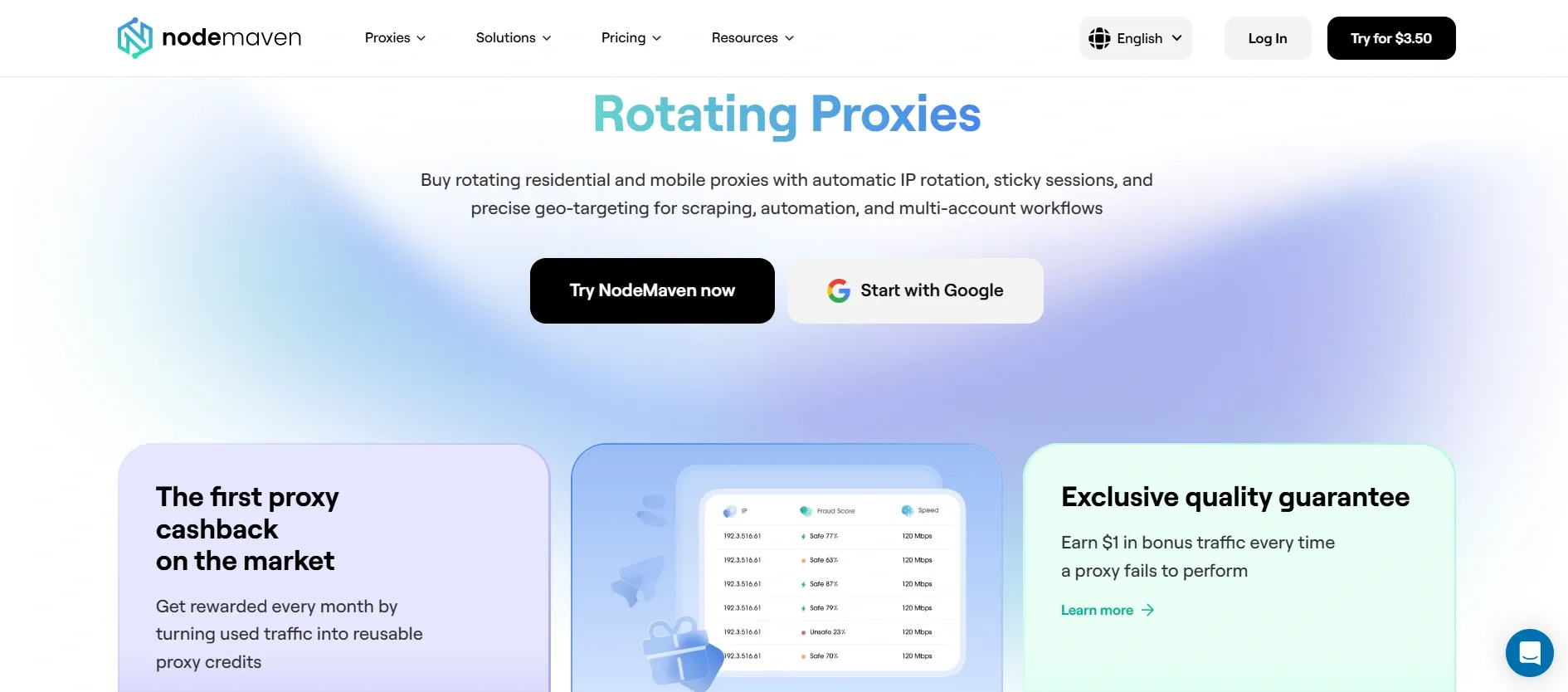
NodeMaven provides rotating residential proxies designed for scraping, automation, SEO monitoring, and other high-volume workflows. The network includes 30M+ residential and 295K+ mobile IPs across 190+ countries, with a focus on clean IPs, geo-targeting, and reliable performance. NodeMaven also offers both flexible rotation and sticky sessions.
Features
- Automatic IP rotation for residential proxies
- 30M+ residential and 295K+ mobile IPs
- Country, city, ISP, and ZIP-level targeting
- Clean rate and higher average success rate
- IP quality filtering
- HTTP(S) and SOCKS5 support
- Traffic rollover and cashback on used traffic
- Unlimited concurrent sessions
- Proxy expert support
Pros
- Quality filtering to reduce use of low-quality IPs
- The same price for residential and mobile proxies
- Long sticky sessions alongside rotating IPs
- Flexible pay-as-you-go and monthly plan
Cons
- Smaller proxy pool than the largest enterprise providers
- Less extensive scraping API ecosystem than some enterprise-focused competitors
Base Pricing: $8.5/month (2GB, residential and mobile)
IPRoyal: Longest sticky sessions
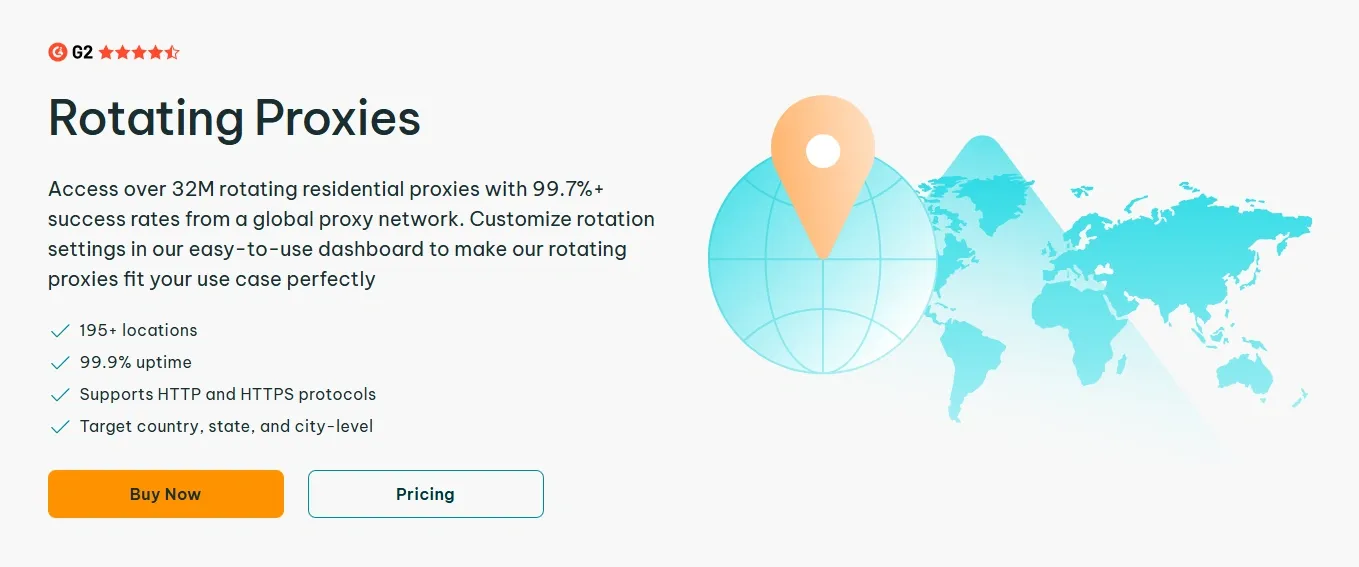
IPRoyal offers IP rotation with its mobile and residential proxies. While the latter has this built in, you must explicitly select rotation when choosing the mobile offering to receive that benefit. It has a decently sized 32+ million-IP network covering 195+ locations.
Features
- User-configured auto-rotation (1-30 minutes)
- Sticky residential sessions (up to 7 days)
- Unlimited concurrent sessions
- Username/password and IP whitelist
- HTTP(S) and SOCKS5 support
- Country, state, and city-level geo-targeting
Pros
- Industry-leading sticky residential sessions
- Chrome and Firefox extensions
- Instant IP change via dashboard or API
Cons
- Comparatively expensive residential plans
- Sub-par customer service reported at Trustpilot
Base Pricing: $7.35/GB (residential, PAYG) and $6.8/GB (mobile, 2 GB plan)
ProxyEmpire: Flexible rotation
ProxyEmpire offers rotating residential, mobile, and datacenter proxies, along with static residential and dedicated mobile options. Its largest pool belongs to rotating residential proxies, which is over 30 million covering 170+ countries. Rotating mobile and datacenter proxies are 4M+ in 170+ countries and 190K+ in 60+ countries, respectively.
Features
- Per-request and time-based rotation (up to 2 hours)
- Rotating residential, mobile, and datacenter proxies
- Country, region, city, ZIP, ISP, ASN, and OS fingerprint targeting
- HTTP(S), HTTP/2, and SOCKS5 support
- Username/password authentication
- Unlimited concurrent sessions
- Optional API-based proxy management
- Team access, granular access controls, and 2FA
- Android app and Chrome extension
- 24/7 chat support
- $1.97 trial (residential and mobile)
Pros
- Rollover of unused bandwidth
- Pay-as-you-go and unlimited-bandwidth residential plans
- Active IP counts per country are visible before purchase
Cons
- No IP whitelisting
- No UDP support
Base Pricing: $3.5/GB (residential, PAYG), $200/day (unlimited residential, 100 Mbps), $4.5/GB (mobile, PAYG), and $25/month (datacenter, 40 GB)
Bright Data: The largest pool
Bright Data has the biggest IP pools in the entire industry. You get over 400 million residential proxies (195+ countries), datacenter proxies (95+ countries), and ISP proxies (35 countries) to rotate into. You can also rotate its mobile proxies, but since it’s closed to new customers as of April 2026, we won’t take those into account for this section.
Features
- City, state, ZIP code and ASN-level geotargeting
- HTTP, HTTPS, and SOCKS5 support
- Per-request rotation and sticky sessions
- Automatic rotation after idle time exceeds 5 minutes threshold
- PAYG and monthly subscriptions
- Unlimited concurrent sessions
Pros
- Hands-off data-collection ecosystem
- Extensive range of scraping APIs and tools
- Great customer feedback across G2 and Trustpilot
Cons
- Can be overwhelming to beginners
- Comparatively expensive residential proxies
Base Pricing: $4/GB (residential, PAYG)
Decodo: Built for AI workflows
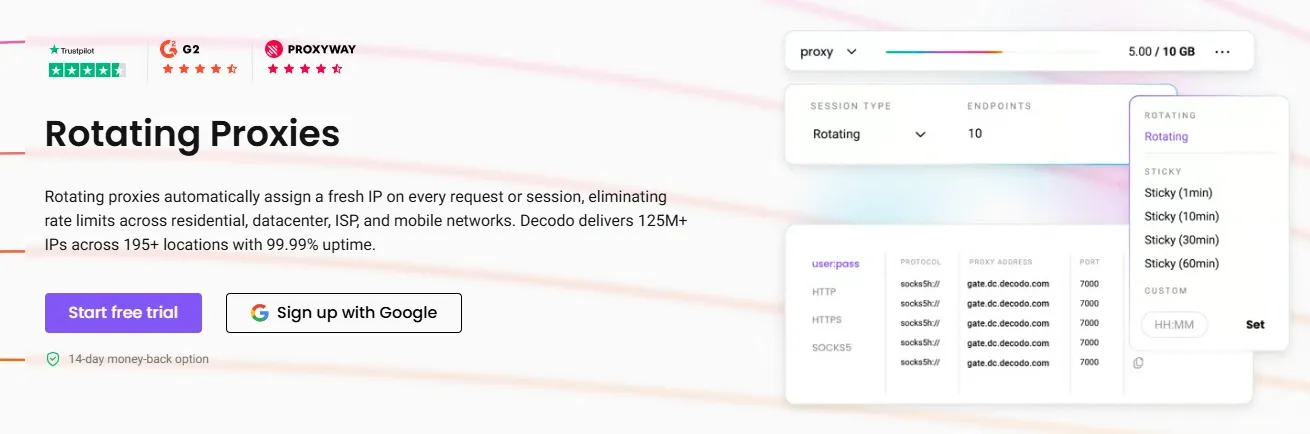
Decodo (formerly Smartproxy) offers IP rotation across all its proxy types. You get decent coverage of over 125 million IPs across 195+ locations. This proxy provider is known for its consistent performance and LLM-readiness. The latter is reflected in its AI parser, MCP server, Markdown outputs, and n8n node for supporting data-hungry AI workflows.
Features
- Request- and interval-based (1 to 60 minutes and custom) rotation
- Up to 24 hours sticky sessions
- HTTP(S) and SOCKS5 support
- Dashboard and API-managed rotation
- Automatic response parsing in Markdown
- Free trial with all proxy types
- Firefox and Chrome extension
Pros
- Ease of use for developers
- Good customer support
- Overall great customer feedback at G2 and Trustpilot
Cons
- Multiple users reported problems with ISP proxies at Trustpilot
- Can be confusing to beginners
Base Pricing: $11.25/month (residential, 3 GB), $7.5/month (mobile, 2 GB), $6/month (datacenter, 10GB), and $3/month (ISP, 1GB)
Oxylabs: Enterprise-grade scraping stack
Oxylabs has rotating proxy servers for its residential, mobile, ISP, and datacenter proxies. As of this writing, it’s only second to Bright Data, if you consider the pool size numbers. Besides, Oxylabs offers several powerful tools to support web scraping and AI workflows, including scraper APIs, a headless browser, and an AI studio.
Features
- Rotating proxy servers with automatic country, city, and ASN-level filters
- Issues new IPs automatically after 60 seconds of inactivity
- Per-request IP rotation and 10-minute sticky sessions
- HTTP(S), HTTP3, SOCKS5 (TCP) protocol support
- Automatic, project-based scaling
- Unlimited concurrent sessions
- Username/Password and IP Whitelisting
Pros
- 24/7 Live chat support
- No-code AI-powered scraping
- Free datacenter trial
Cons
- Comparatively expensive plans
- Sub-par Trustpilot ratings
Base Pricing: $30/month (residential, 5 GB) and $30/month (mobile, 4 GB)
Rotating Proxy Use Cases
Rotating proxies can be used in a wide-range of activities but here are just a few of their most common use cases:
- Price monitoring: Companies can use web scraping to track competitors' prices, and some e-commerce stores even have automated systems to price-match key competitors.
- Market research: A wide range of industry data is publicly available online, allowing firms to gain insights through web scraping, whether studying competitors' marketing or identifying new M&A opportunities.
- AI & LLMs: AI requires large datasets. Many AI tools use Common Crawl, a vast database of already-scraped data, as a basis for their foundation models, but firms also constantly crawl new websites to try to gain a competitive edge.
- SEO monitoring: Companies like Ahrefs and Semrush (along with internal marketing departments) constantly scrape search engines and crawl web pages to gather information on search rankings for specific keywords and to identify competitors' backlinks.
- Financial market analysis: Hedge Funds are increasingly seeking alternative data to feed into their investment models to beat the market. There's a wide range of data available online, from subreddits like WallStreetBets to stock endpoints on e-commerce websites.
- Real estate market analysis: Many real estate firms use web scraping to collect property prices and market trends in specific areas, along with sale times and overall inventory. This helps large property management companies and investors time the market and oversee their portfolio.
Key Factors in Choosing the Best Rotating Proxy
- Proxy pool: The number of proxies provided by a service is probably the single strongest factor when it comes to choosing a rotating proxy service. A large proxy pool means that the provider has a pool of many IP addresses, usually tens of millions. This means you have access to a diverse range of proxies, and the larger the pool, the less likely the proxies are to be heavily used or banned, almost guaranteeing that at least some of the available proxies will work for your specific use case.
Large pools also typically offer superior geographic coverage, letting you target specific countries, cities, and ISPs more effectively since there are more IP addresses in the network for each targeting characteristic you need. - Service provider: Moving away from the core characteristics of the proxy pools themselves, you’ll also want to look at the provider to see if their pricing models (per GB or IP), user interface, and customer support are up to your standards since this will have a big impact on your overall experience.
- Success rate: Another key determinant is success rate, or more simply, the percentage of requests you make when using a proxy that do not get blocked or fail when accessing a specific website. A low success rate can indicate an unreliable backconnect network, poor routing logic, or a bad pool of proxies that are already banned on the website you’re trying to use them on.
- Uptime and reliability: If your proxies aren’t online, then they aren’t very useful to you, that is why uptime and reliability matter. Proxy providers route traffic through servers, which then route your packets to peers in their proxy network. These servers form the backbone of the provider’s backconnect network and play an incredibly important role in ensuring that proxies are fast and that your connection is routed to the best peer in the network for your specific request.
If the backconnect network is unreliable or slow, you’ll face issues, and your rotating residential proxies will be harder to use. You should check whether providers have service-level agreements (SLAs) or advertise their historical uptime to assess whether they operate a reliable network. - Bandwidth tracking: Most rotating proxies are charged per GB, i.e the amount of data that flows through the proxy, and this means tracking bandwidth usage is incredibly important. If a provider can’t do so accurately, they could mischarge you and make certain proxies uneconomical.
Providers should be able to offer near-real-time bandwidth and request tracking that is accurate and easy to understand. If you’re ever unsure about a provider's tracking system, you can run tests using traffic monitoring software like Wireshark. - Connection speed: Connection speed determines how quickly tasks can be completed through a proxy, measured by response time and data transfer rates. Datacenter proxies consistently offer the fastest speeds but are more easily detected by websites, while residential proxies provide better anonymity at the cost of slower speeds, since they route through real consumer internet connections.
Remember, time is money! That's why speed becomes particularly crucial for time-sensitive operations such as purchasing limited-quantity items, large-scale data collection, or automated tasks requiring quick responses. The actual performance you'll experience depends heavily on factors like the proxy location, network infrastructure, and current server load. - Cost and Affordability: Proxy pricing varies widely based on the type of proxy, traffic volume, number of IPs, geographic locations, and additional features offered.
Datacenter proxies typically cost the least since they operate from commercial servers, while residential proxies command higher prices due to the complexity of maintaining a network of real residential IPs. Mobile proxies generally sit at the premium end of the pricing spectrum.
Most providers structure their pricing either around bandwidth usage or IP counts, with volume discounts available for larger commitments. Budget providers offer basic proxy services at lower rates but may compromise on performance or reliability, while premium services charge more but deliver better speeds, success rates, and support.
When evaluating cost-effectiveness, consider not just the base price but also factors like proxy reliability, success rates, and whether the provider charges for failed requests.