
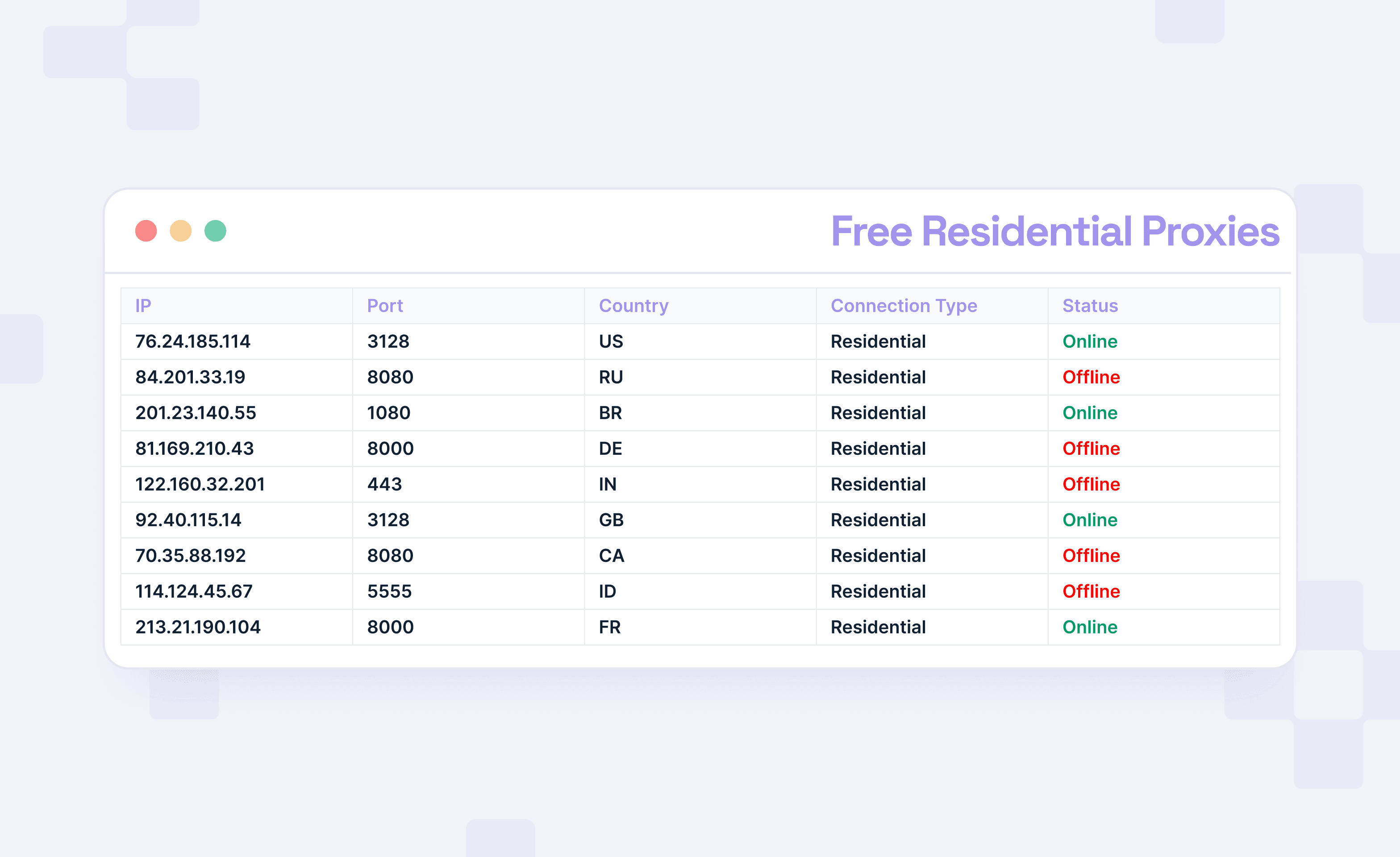
There are many publicly available lists of free proxies advertised as residential proxies. But are they actually residential? If so, what is their credibility in terms of safety?
This guide covers the reality of free residential proxies, a few ways to verify they are actually residential, and the risks they pose. Lastly, we have shared alternatives to these free residential proxies, such as Byteful’s 1GB free residential data trial, and the difference it makes compared with free residential proxies.
Why Are Real Residential IPs Almost Never Free?
Residential proxies, unlike datacenter proxies, rely on real household connections. These connections come with ongoing bandwidth costs and infrastructure costs to manage routing and reputation.
No provider can cover that cost by providing residential proxies for free, unless they want you to test their residential proxy network. If they claim to be 100% free, you are usually paying a price that you are unaware of, like your data and the traffic that routes through that proxy’s infrastructure, or worse, sharing your internet connection with strangers without your consent. And even in such cases, there is no guarantee that the proxy is actually residential.
The Real Risks of Free Residential Proxies
As stated earlier, when something looks free from the surface, there is usually some hidden cost and risks under it, and free residential proxies are no exception. These proxies come with some strings attached to them, and this section talks about some of them.
Non-Consensual Sourcing
Reputable residential proxy providers source their residential proxy IPs through legitimate methods. Those sourcing methods include consented Software Development Kit (SDK) and peer programs on real devices, where users explicitly agree to share their bandwidth in exchange for some benefits. The proxy provider pays the cost of those benefits, and then that cost is covered by charging the residential proxy users for the proxies they use.
When you are not paying for using these residential proxies, then that raises a question about the method being used to source those residential IPs.
The free residential IPs you use are usually acquired through malicious means, like botnets, networks of compromised digital devices. These proxies are probably routing your traffic through a compromised device on the other side of the world, and the owner usually has no idea that their device is being used for routing your traffic. By using such free services, you are actively benefiting from cybercrime and becoming a part of it.
You Become the Exit Node
When you use something for free, you become the actual product, and it applies to the free residential proxies as well.
Other than the common risks that come with free proxies, like traffic logging, free residential proxies come with a higher risk.
Some free residential proxy setups work by silently installing proxy components on your device through bundled software or browser extensions, without clearly disclosing what they do. And sometimes, these software components share your internet connection with the very free residential proxy setup you are using, that too without your consent.
It turns your IP address into an exit node, that exit node becomes a part of the free residential pool, and then it becomes available for a stranger on the internet.
While you are doing a routine activity from your connection, someone else who is now sharing that connection with you might be involved in malicious activities like credit card fraud. When that malicious activity is tracked back to the IP address it came from, your IP address shows up in the results, and due to this, your residential IP could end up on blocklists and be flagged for fraud. Eventually, you pay the price for the activity you had no knowledge of and were not a part of.
Are the Free Residential Proxies Useful for Any Use Case?
For very limited use cases, such as accessing content or a website from a different geographic location, these free residential proxies can be useful. But when your use case moves a little beyond that, like web scraping or social media account management, free residential proxies fall very short and create more problems than they solve.
As mentioned earlier, such free residential proxy services route your traffic through botnets. Since there is usually no check on who is using these IPs and for what purpose, IPs are probably already being abused by other users. For this reason, these IPs usually have a bad reputation, are blocked on most targets, and have a high fraud score.
Another factor is that the compromised devices in these botnets go offline, get cleaned by antivirus software, or get patched. This makes the botnet-sourced IP pools very unstable, and the IP that you connected to a few minutes ago may no longer be available.
There's also a data sensitivity and security factor worth considering. If whatever you're doing involves transmitting sensitive information like logging into accounts, handling payment information, or transmitting anything private, free residential proxies should be a straight no. Traffic logging is very common across free proxy infrastructure, and you have no way of knowing what the provider is logging from your traffic and how that logged data will be used.
Considering all of these factors, free residential proxies are rarely useful and are not suitable for any high-stakes use case.
From Where Can You Get Free Residential Proxies?
If you still want to try free residential proxies and see if they are suitable for your use case, then this section lists some of the sources to get free residential proxies.
General Proxy Lists
While there is no specific list available for free residential proxies, there are some sources from which you can get general free proxy lists and then filter them to display only residential proxies, if there are any.
The best example would be Spys.one. It hosts an extensive list of free proxies with some filtering parameters. While there is no option to filter residential proxies, you can filter proxies by ASN. To find free residential proxies in the list, filter by an ASN that does not belong to any hosting or cloud provider, and with all the efforts, the chances of finding one are almost none.
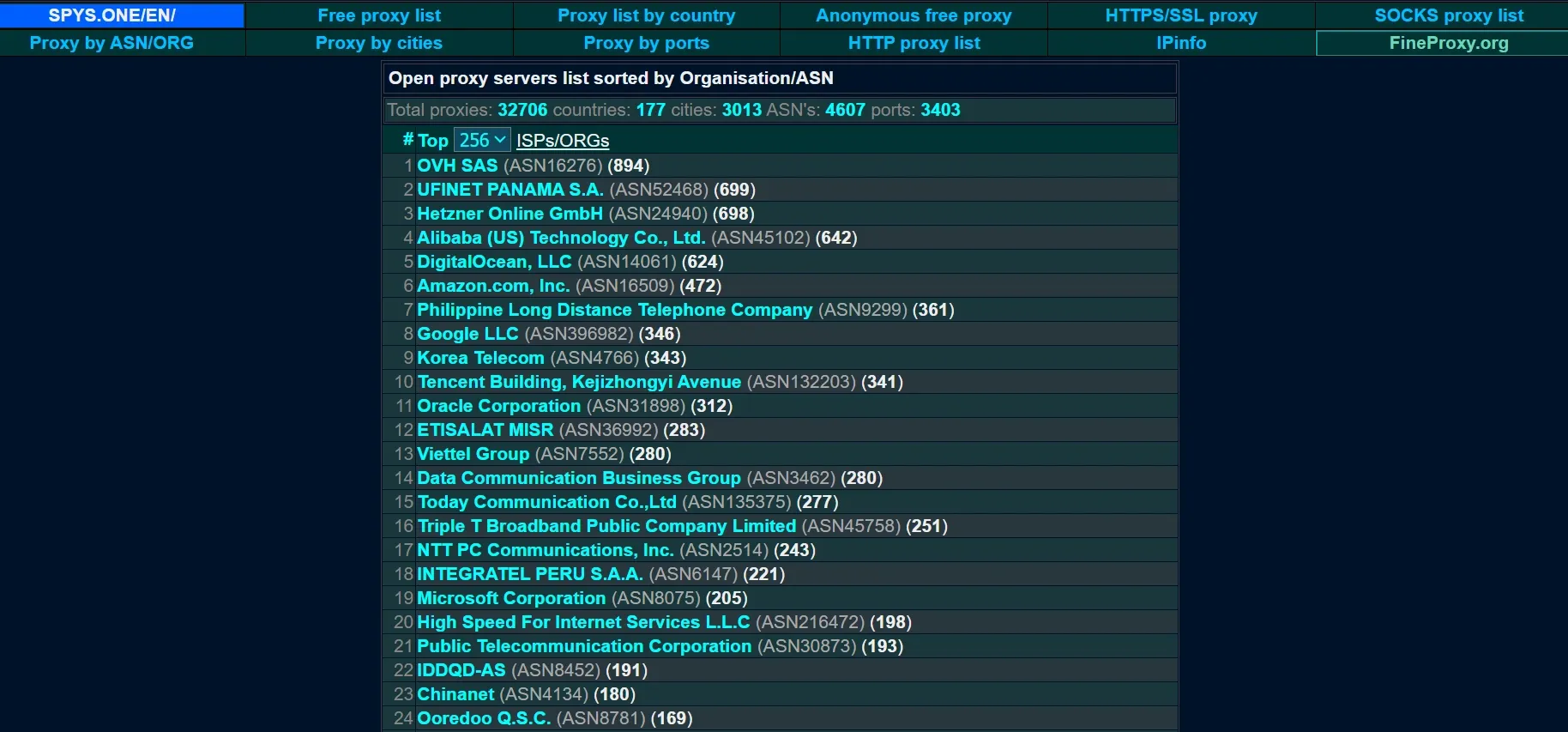
If you believe you have found a residential proxy, as an extra step of verification, check the proxy's IP address with a tool like IP2Location (explained later) to confirm it is residential.
The Safer Way To Get Residential Proxies for Free
The only safer way to get residential proxies for free is to use a free trial by a reputable proxy provider. When using free trial residential proxies from a reputable proxy provider, there is usually no risk of unethical sourcing or your connection being shared with anyone else. And you get to experience the real residential proxies before you decide to buy a plan.
An example of such a free trial is Byteful's 1GB residential data trial, which you can get after signing up on our dashboard and completing a short KYC. We KYC every user to keep malicious actors off of our infrastructure and to ensure that everyone sharing the pool is a legitimate user, which directly translates to cleaner, less-abused IPs for every user.
With this free trial of residential data, you will get access to a residential IP pool of 35M+ IPs across 195+ countries with precise city, ZIP, and ISP-level targeting.
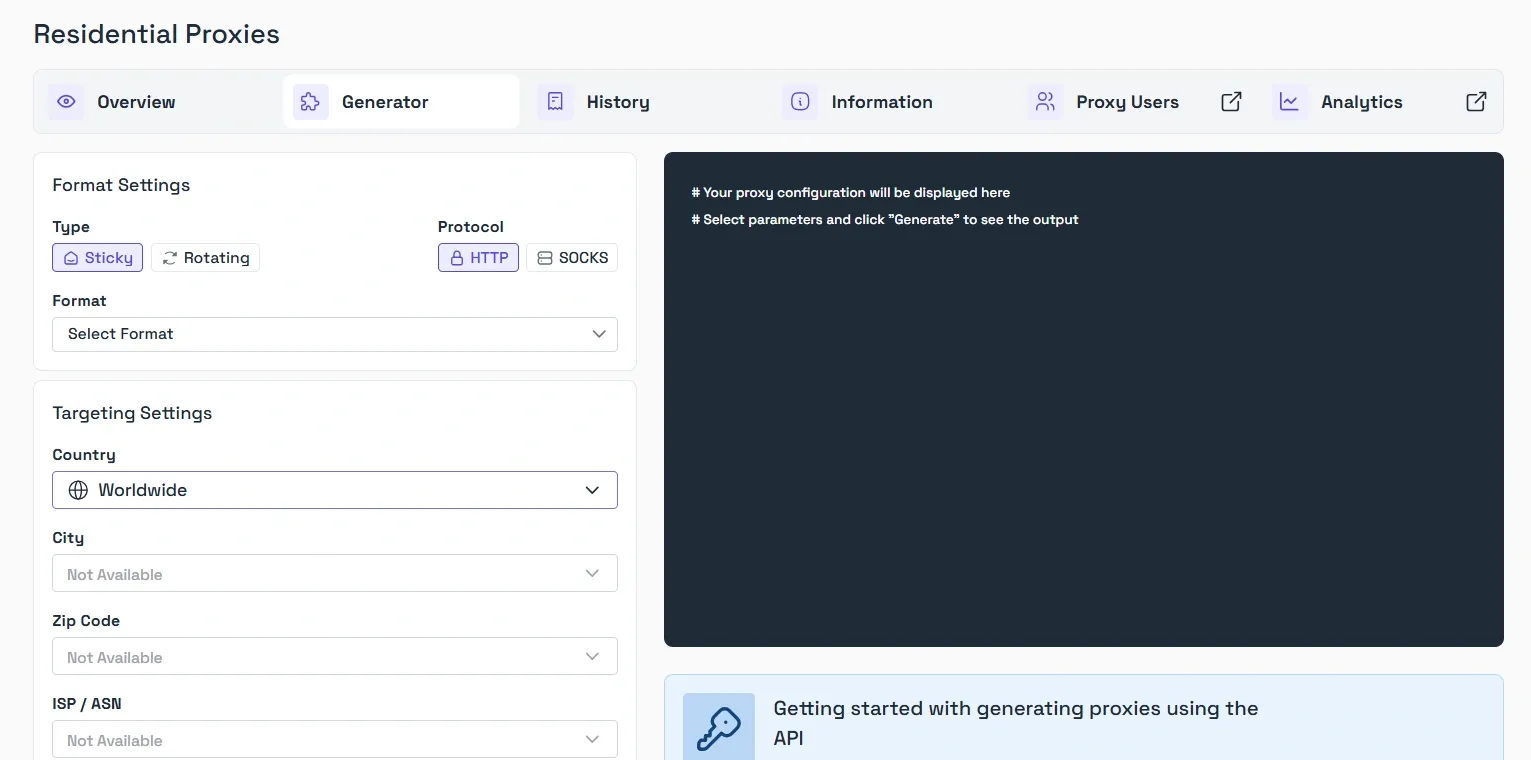
Our proxies have a 99.9% connection success rate, and you can also benefit from our AI routing tool, SmartPath AI, which routes non-essential requests through datacenter proxies, saving residential bandwidth.
Beyond all of this, our residential proxy performance helped us secure a global success rate of 99.69%, comfortably above the median of 99.28% in an independent study titled Proxy Market Research 2026 (Proxyway). Our residential IP quality detection rate was 37.09% with a risk score of just 2.61, which is cleaner than most participants in the study. Additionally, we ranked first in latency benchmarks, with the slowest 5% of requests (P95) completing within one second.
How Can You Tell if a “Residential” Proxy Is Really Residential?
When you get a free proxy list titled “free residential proxies”, there is no guarantee that the proxies are actually residential. This section lists some ways to check if the proxies are actually residential or are just advertised with that title.
Check the ASN / IP type
Every IP address is registered to an Autonomous System Number (ASN), and that ASN tells you who owns that IP block. ISPs like Comcast or BT register their residential ranges under their own ASNs. Cloud providers like AWS and DigitalOcean register their server ranges under datacenter ASNs.
To check the proxy IP type or ASN:
1. First, find the IP address of your proxy. You can do that using a website like ifconfig.me in your browser while connecting through the proxy, or use cURL with your proxy details.
curl --proxy proxyip:proxyport -U username:password https://ifconfig.me
2. Now, use a tool like IPVoid and put in your proxy IP address. The results will show you the ASN and the ISP your proxy IP belongs to. This gives you an idea of whether the proxies are residential or not.
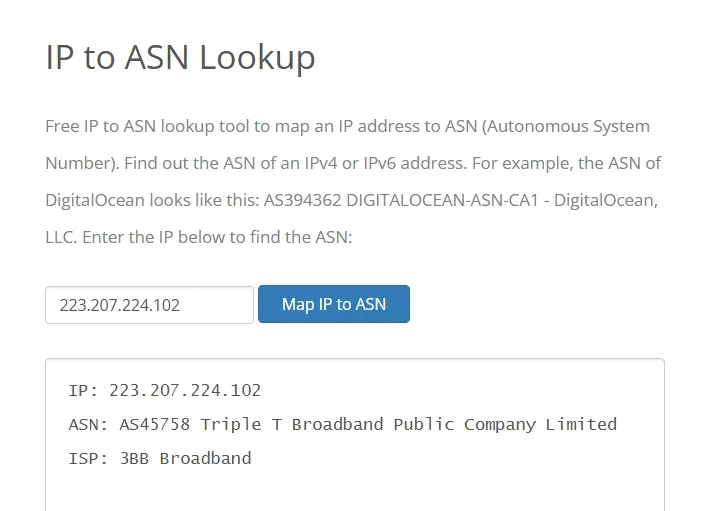
Another way to check these details is by using an online tool like ip2location.com.
Go to the website ip2location.com after connecting through the proxy, and the website outputs a few details like AS usage type and proxy type that give you a very clear picture and tell you if the proxy IP you are connecting through is residential or not.
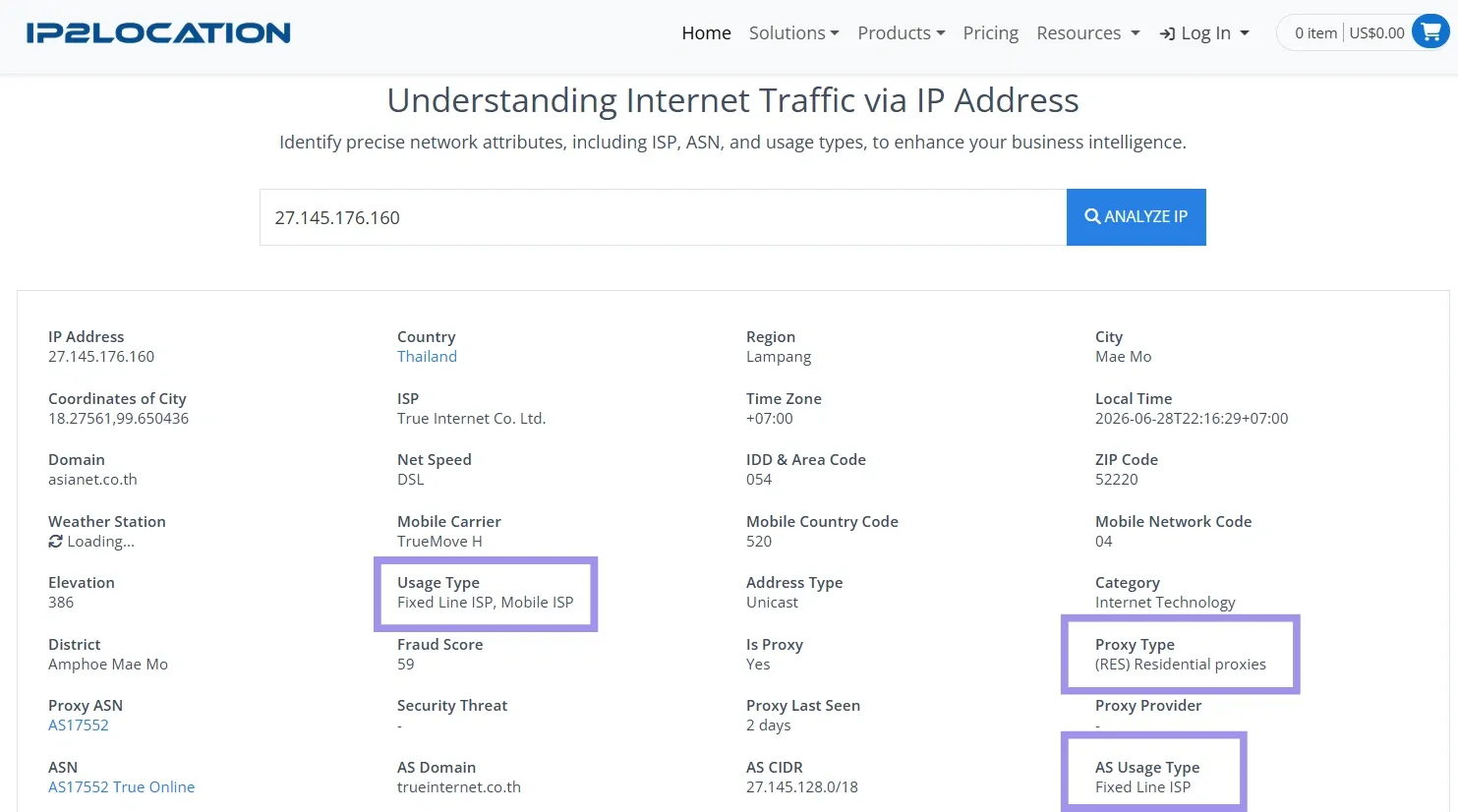
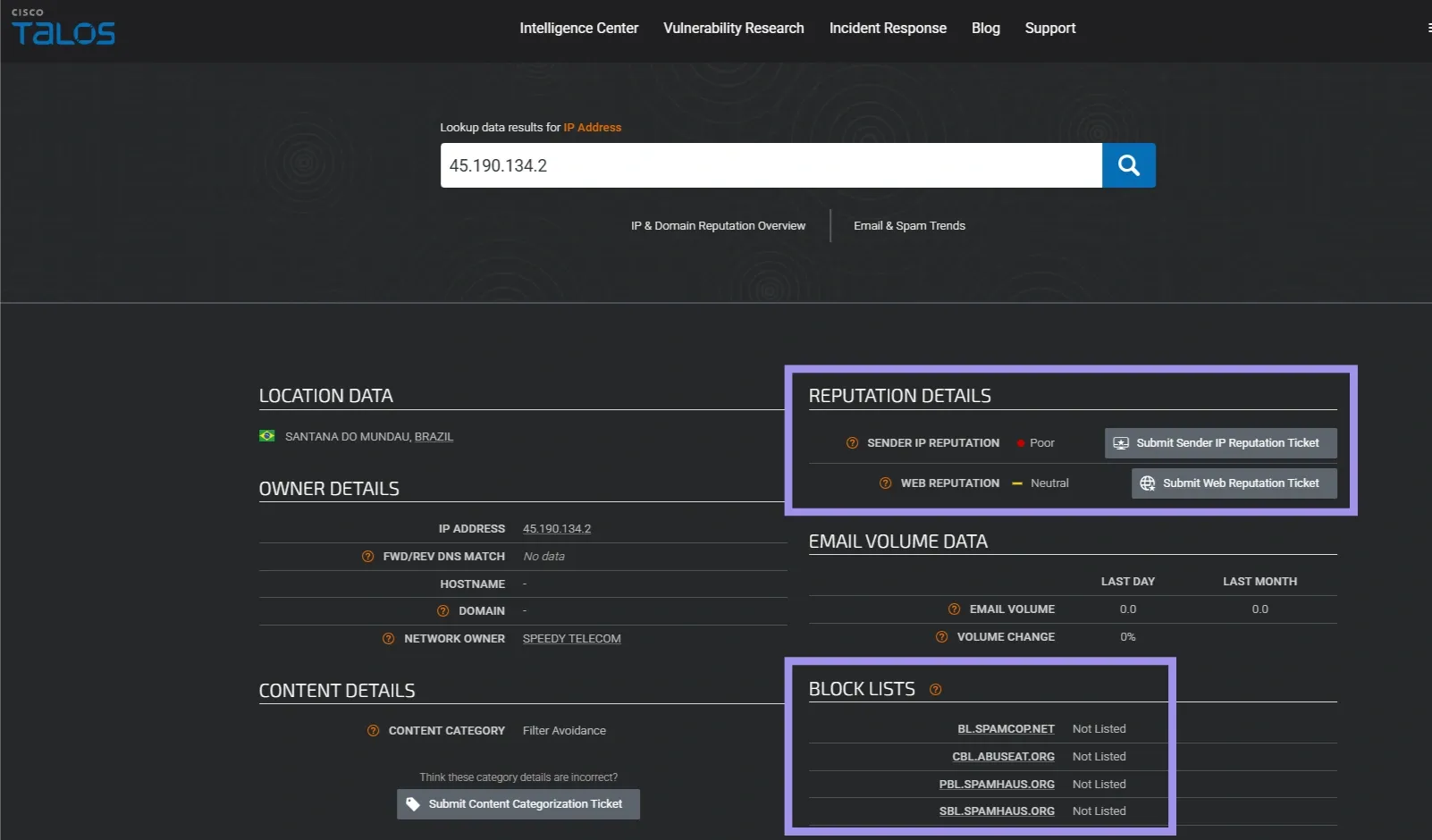
After verifying that the IP is residential, you can also check the IP reputation and fraud score through a tool like CISCO Talos for a deeper security verification. If the IP shows a poor reputation on Talos, it is likely being abused by other users or belongs to a malicious network, which makes it a poor choice for any serious task.