

Private proxies give you an IP address that is exclusively yours, not shared with anyone else, and that exclusivity makes these proxies the go-to choice for use cases where IP reputation matters the most.
But with all the different private proxy providers available in the market, how will you know which one is a better fit for you? Choosing the wrong provider can cost you more than it benefits. This guide breaks down all of the major private proxy providers in 2026, what they have to offer, and how to evaluate them.
What Types of Private Proxies Are There?
Private proxies, also known as dedicated proxies, have different types based on the source of their IP addresses. Because no other user shares your IP, you have full control over its reputation, and no one else can contribute to its bad reputation or get it blocked.
Other than the IP exclusivity, there are many more differences between private proxies and shared proxies.
| Factors | Private proxies | Shared proxies |
|---|---|---|
| Reputation | You have more control over IP reputation. | Limited control. The activity of other users also affects the IP reputation. |
| Access | The IP is used by one exclusive user. | IP is shared among multiple users. |
| Session | These proxies usually have stable sessions. | Session stability depends on rotating and sticky settings. |
| Price | Higher in price due to the exclusivity of IP addresses. | Prices are lower because the IPs are shared. |
Private Datacenter Proxies
These proxies are the classic meaning when it comes to private proxies:
- Hosted on datacenters, which makes them fast in speed.
- IPs are detectable by anti-bot systems due to their origin from datacenters
- Best suited for jobs where speed and volume matter more than IP trust, like web scraping on low-to-medium-sensitivity targets
Private Static ISP Proxies
These proxies are a balance between datacenter performance and residential trustworthiness:
- Registered to a real ISP but hosted in datacenters.
- Combine the speed of datacenter proxies with the reputation of residential proxies.
- Usually used for jobs where the target is strict about blocking datacenter IPs.
Best Private Proxy Providers in 2026
Not all private proxy providers are the same. Pricing, pool size, location coverage, and reliability vary among all of them. Here's a breakdown of the top options and what sets each one apart.
Note: We are relying on the latest Proxyway research 2026, where we have been tested transparently with other providers.
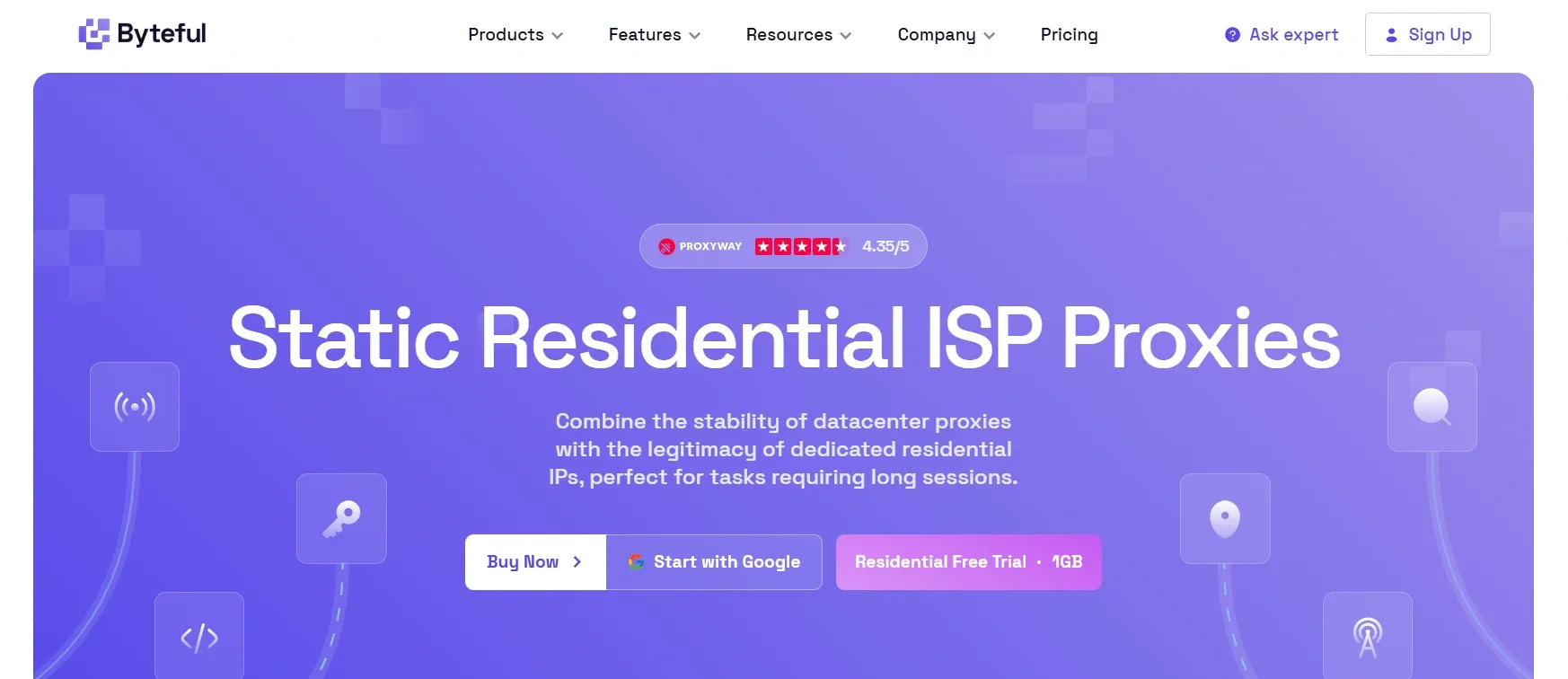
Byteful: Best for Ethically Sourced Private Datacenter & ISP Proxies
We, Byteful, focus on ethically sourced private datacenter proxies and ISP proxies across mixed subnets with smart routing through our AI tool, SmartPath.
Our private ISP and datacenter proxy pool delivers 99.9% uptime with subsecond latency and country-level geo-targeting, ensuring fast and consistent connections for your workloads. We also support HTTP, HTTPS, and SOCKS5 protocols alongside full REST API access, making integration seamless.
Our IPs are distributed across mixed subnets to reduce detection risk, and every private proxy plan comes with unlimited concurrent sessions and full REST API access so scaling up never comes with hidden data costs.
For tighter security, you can whitelist IPs to restrict access to your proxies, and everything is manageable from our easy-to-navigate dashboard that gives you live network activity and access control rules in one place.
Pricing:
Starting from $2.50/IP per month for a dedicated datacenter IP and $3.50/IP for private ISP proxies. Discounts apply to bulk buys and longer-term plans, which go as low as $1.12/IP per month for dedicated datacenter proxies and $1.80/IP per month for private ISP proxies.
Pros:
- Clean IPs with low fraud score and 200GB/IP fair-usage allowance.
- 60% of savings with intelligent AI SmartPath routing.
- Set up tools like Proxy Tester and Proxy Formatter.
- There is no minimum purchase requirement, and you can buy as few as a single proxy.
Cons:
- Smaller IP pool compared to other major proxy providers.
According to public reviews, our customers like the speed of our proxies, the simplicity of our dashboard, and the quick, smooth experience with customer support.
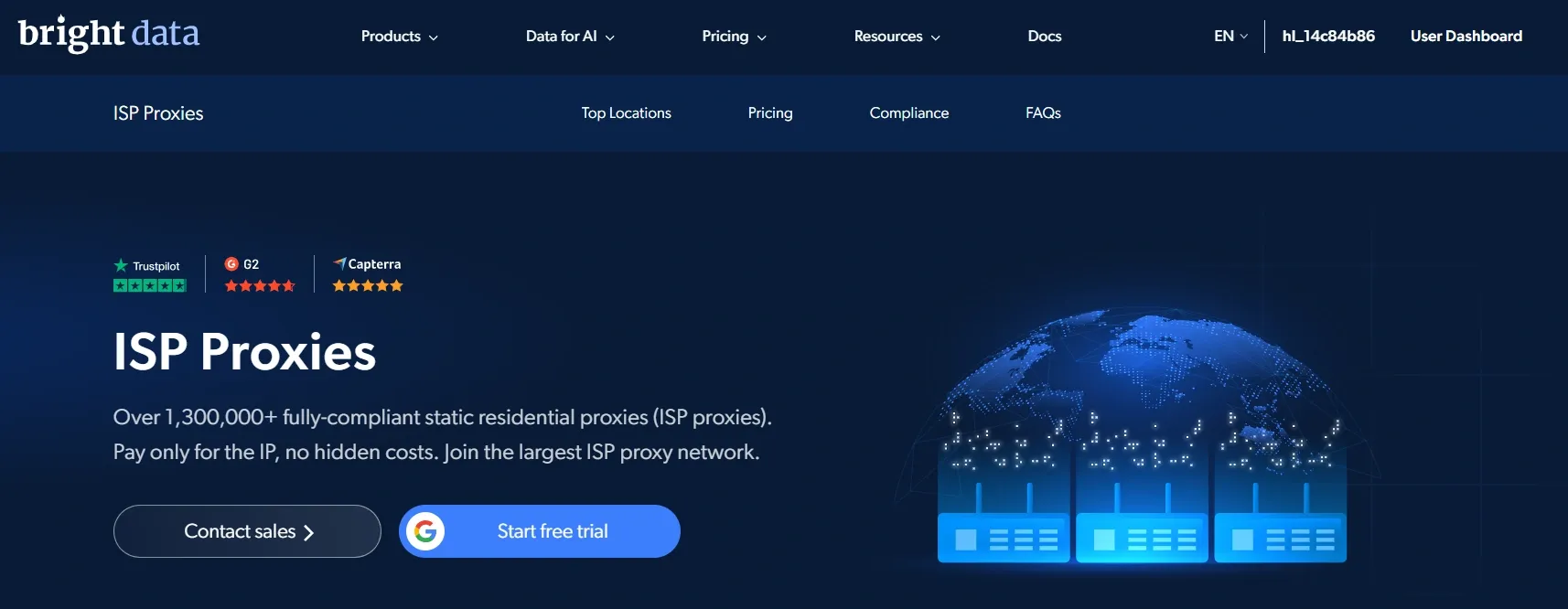
Bright Data: Best for Large-Scale, Feature-Rich Datacenter Proxies
Bright Data is one of the most versatile proxy providers, with a diverse network of private IPs. The platform offers a wide range of tools for various purposes.
Bright Data supports HTTP, HTTPS, and SOCKS5 protocols with country-level geo-targeting. It also reroutes the request automatically to another proxy in the nearest location if one goes offline.
Pricing:
Dedicated datacenter proxies pricing starts with $2.20/IP per month. Dedicated ISP proxies start at $3.5/IP per month. Discounts apply to larger plans.
Pros:
- Free-tier comes with 5,000 free credits, usable on some of the platform tools
- 24/7 support
Cons:
- Free trials for proxies are available for businesses only.
- One of the more technically challenging providers to use
- Higher pricing
Users find the integration with the AI assistant (G2) to be helpful, especially for non-technical users. They like the platform's clean interface, but there are mixed reviews (Trustpilot) of customer support.
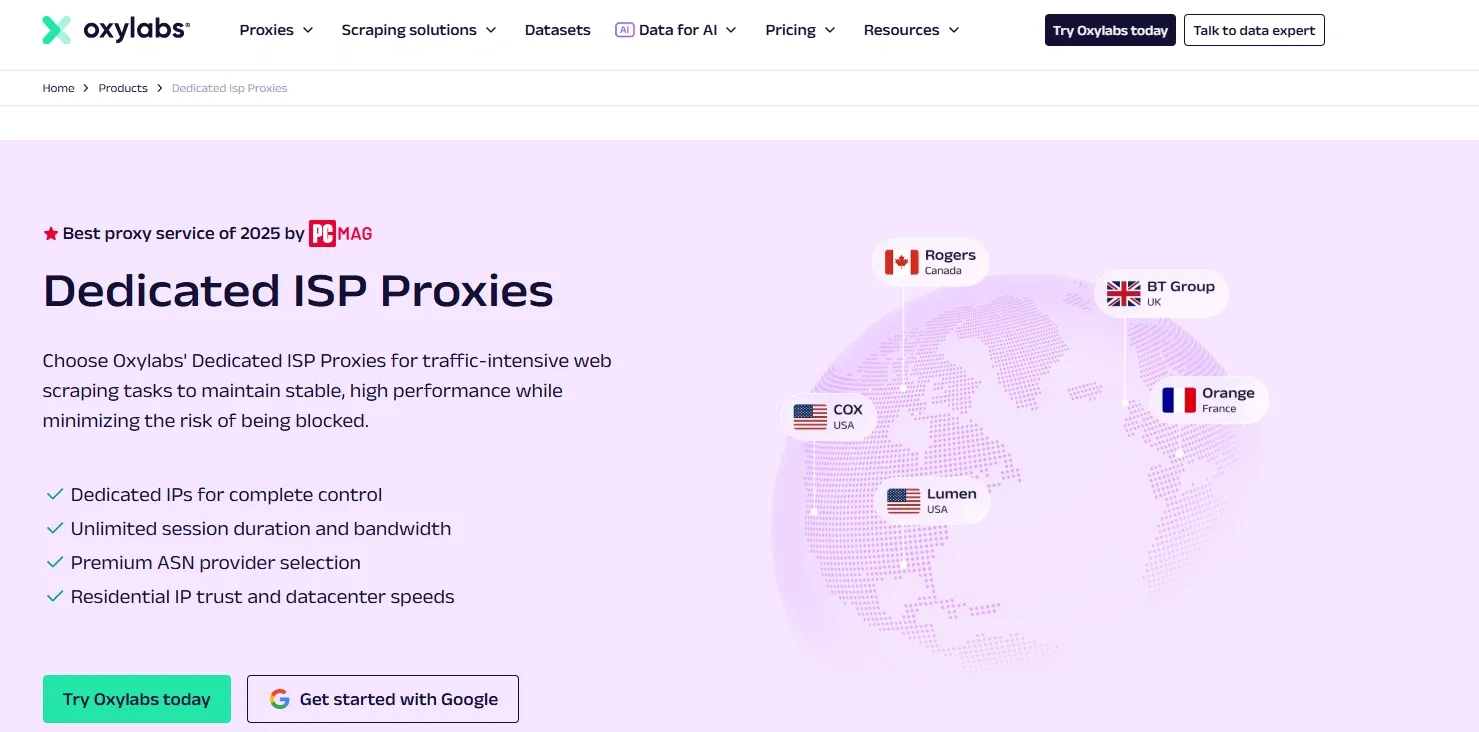
Oxylabs: Best for the Largest Dedicated IP Pool
Oxylab runs the largest dedicated datacenter IP pool. It offers a premium service with a dashboard that includes detailed usage statistics. With an IP pool of 2M+ for dedicated datacenter proxies, it supports HTTP, HTTPS, and SOCKS5 protocols.
Oxylabs covers 22 countries with dedicated ISP proxies and 36 countries with dedicated datacenter proxies. While it supports country-level geo-targeting, state- and city-level geo-targeting is also available on the Enterprise plan.
Pricing:
Dedicated datacenter proxies cost $2.25/IP per month with a minimum of three IPs. Dedicated ISP proxies pricing starts from $3.2/IP with a minimum of three IPs. Discounts apply to bigger plans. A custom enterprise plan is also available.
Pros:
- Suites both small and enterprise-level operations
- 24/7 support
Cons:
- May not be budget-friendly for individuals due to premium pricing with a minimum purchase requirement
- Free trial IPs from the US only
Users really like the reliability and the speed (Trustpilot) of Oxylabs proxies, along with the responsiveness of the support team. They find the pricing to be a little high (G2), as there is a minimum purchase requirement as well.
Decodo (Formerly Smartproxy): Best Private ISP Proxies
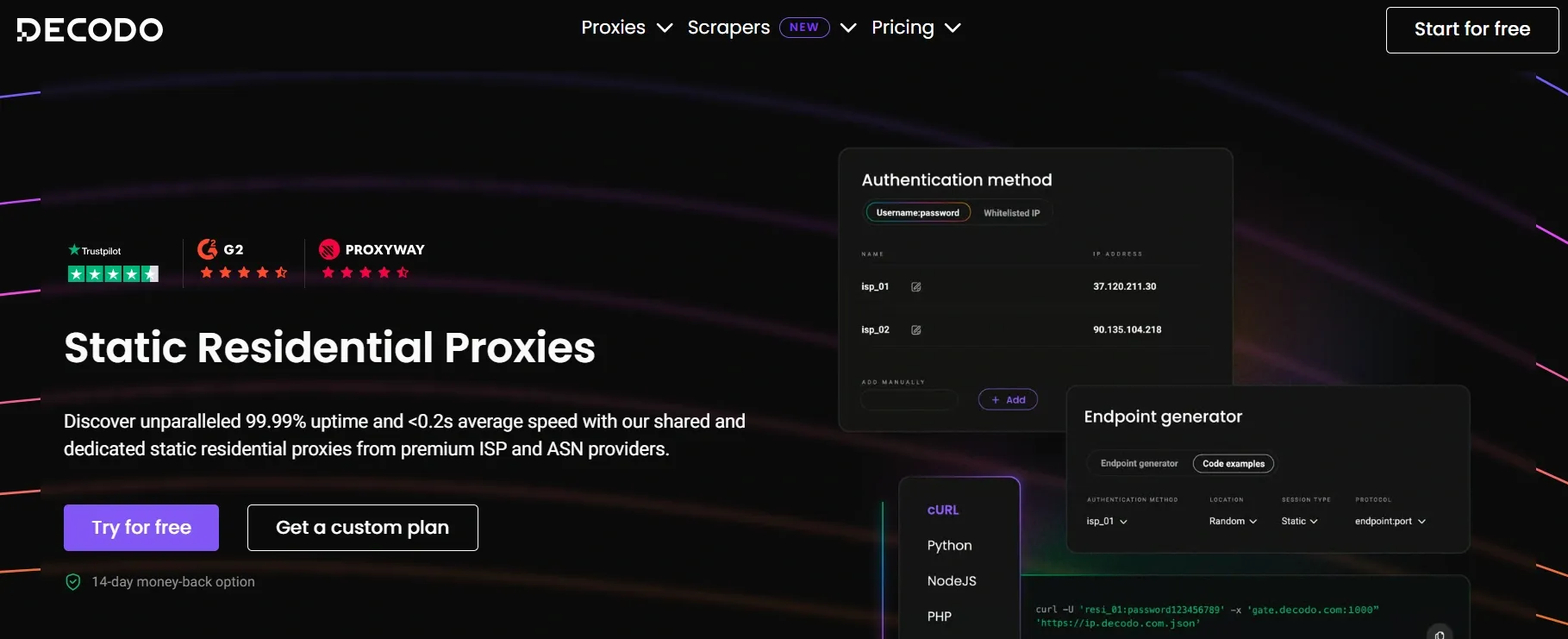
Decodo provides both private datacenter and ISP proxies with solid performance, competitive pricing, and a clean dashboard.
It covers 15 countries with private ISP proxies and supports HTTP, HTTPS, and SOCKS5 protocols. The provider promises 99.99% uptime with less than 0.3s of response time.
Pricing:
Dedicated datacenter proxies cost $1.85/IP per month with a minimum purchase requirement of three IPs. Pricing for private ISP proxies starts from $3.33/IP for a minimum of three IPs. Discounts apply to bigger plans.
Pros:
- Live usage statistics
- 14-day money-back guarantee
- 24/7 support via chat and email
Cons:
- Geo-coverage of only 4 countries for dedicated datacenter proxies
Users say that Decodo proxies are fast (Trustpilot) and the customer support is great, but the geo-coverage can be better (G2).
ProxyEmpire: Best for Private Residential and Mobile IPs
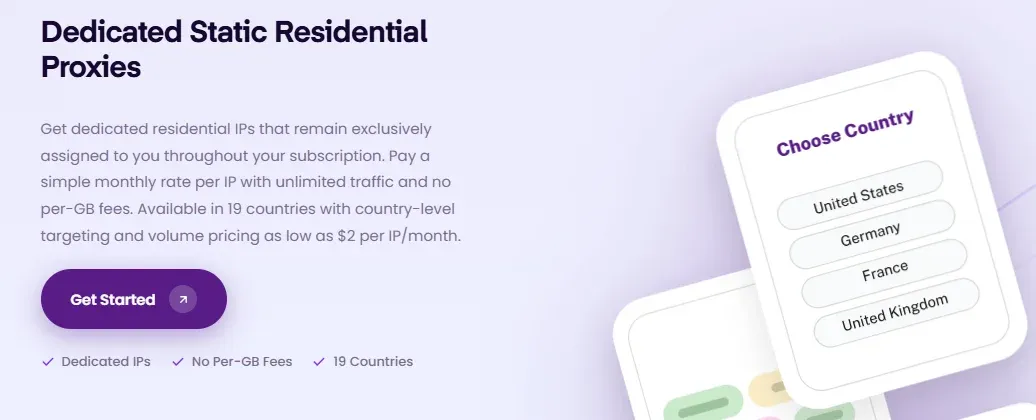
ProxyEmpire offers two private proxy products: static residential (ISP) and dedicated mobile proxies that stay exclusively assigned to you throughout the subscription length.
ISP proxies are available in 19 countries with country-level geo-targeting, and every plan includes unlimited traffic with no per-GB fees (100 GB FUP). Likewise, ProxyEmpire sells dedicated 4G and 5G connections, which you can IP-rotate on demand based on the plan, USA 5G or multi-country package. Both, ISP and dedicated mobile support HTTP, HTTPS, SOCKS5, and HTTP/2 protocols.
Pricing:
Static residential (ISP) proxies start at $3.50/IP per month. On the other hand, dedicated mobile proxies cost $250/month for the USA 5G package and $125/month for the multi-country package (3 USA locations plus the UK, Austria, and Israel).
Pros:
- Unlimited ISP traffic (100 GB/IP/month soft cap)
- 50 locations on USA 5G plan
- Unlimited bandwidth with carrier-imposed FUP (mobile proxies)
Cons:
- Only country-level geo-targeting with ISP proxies
- No private datacenter proxies
Users report prompt customer service (G2) and decent performance. However, some reviews (Trustpilot) mention DNS and IP geolocation mismatches.
Webshare: Best Free Tier and Self-Service
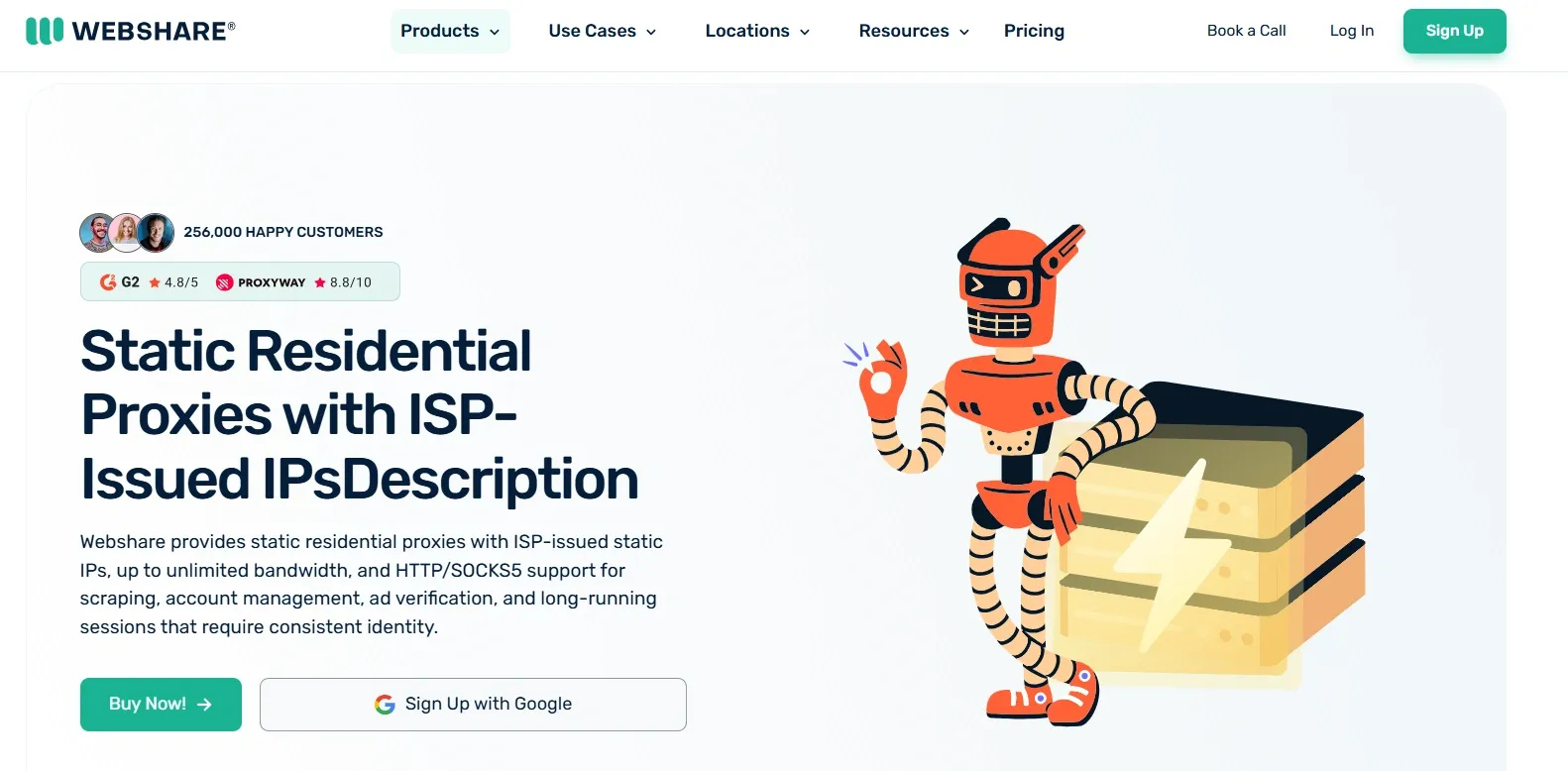
Webshare provides a highly customizable service. The dashboard is easy to navigate, and the provider targets entry and mid-level customers.
The provider covers 11 countries with dedicated ISP proxies and ~35 countries with dedicated datacenter proxies. The plans are highly customizable, and the proxies support HTTP and SOCKS5 protocols.
Pricing:
A single dedicated ISP proxy costs $4.20/IP with 250 GB. Dedicated datacenter IP costs $1.40/IP with 250 GB. Discounts apply to larger plans.
Pros:
- Free trial of 10 datacenter IPs across multiple locations
Cons:
- Features like high concurrency are available as paid add-ons
User reviews say that their customer support (Trustpilot) is amazing and the proxies are cost-effective (G2).
IPRoyal: Best for Low-Cost Dedicated IPs
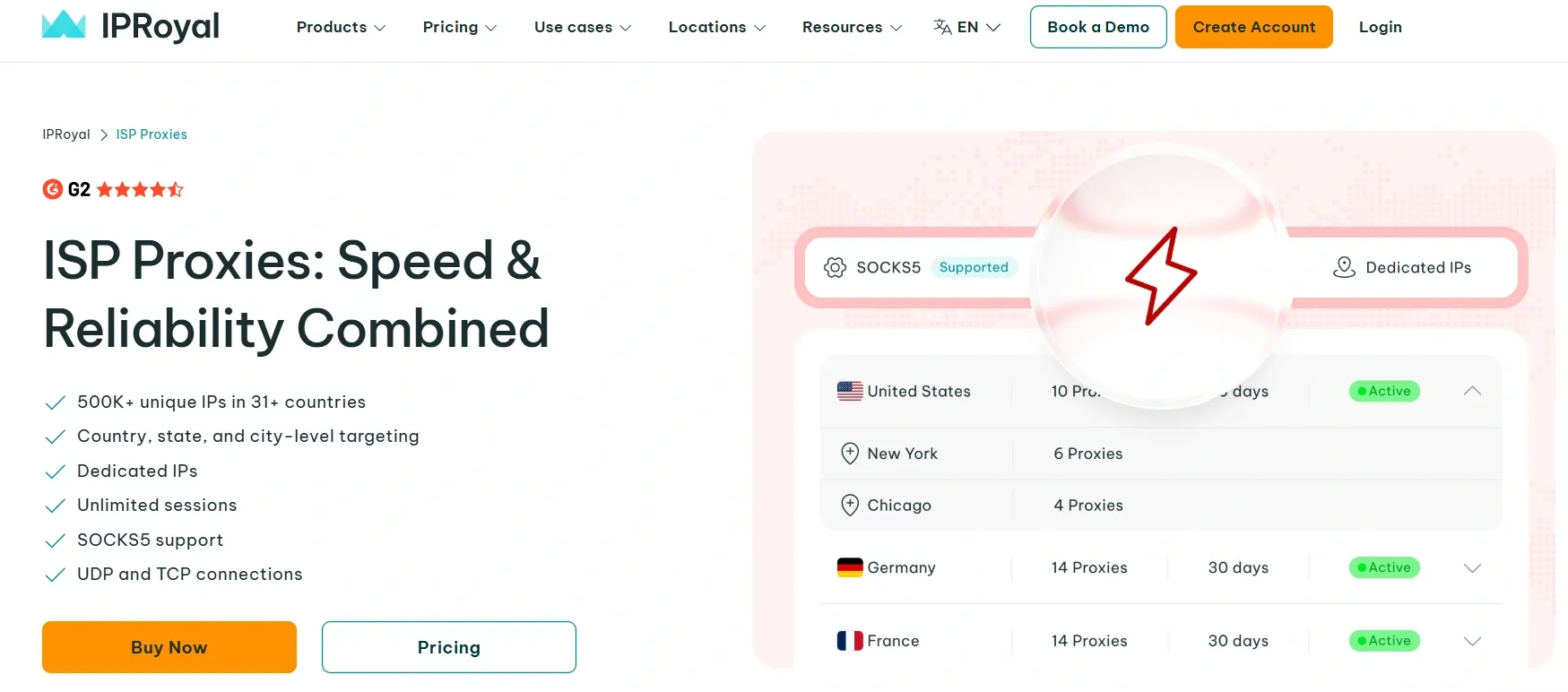
IPRoyal competes on price, and it lets you buy as few as one IP. There are some additional add-ons that you can have for an additional cost.
The provider supports state- and city-level targeting, with 60+ datacenter proxy locations and 30+ ISP proxy locations. It supports HTTP, HTTPS, and SOCKS5 protocols. You can also add extra requirements, like multi-device access and getting a 0 fraud risk IP, for an additional fee.
Pricing:
Starting from $1.8/IP per month for a dedicated datacenter IP. For ISP proxies, pricing starts from $2/IP per 24 hours and $4/IP per month. Discounts apply to larger IP counts and longer-term plans.
Pros:
- Affordable dedicated datacenter IPs
- 24/7 support
Cons:
- Targeting a specific state or city costs extra
- No built-in rotation
Users say that they like the reliability of proxies (G2), and customer support is smooth. Some reviews (Trustpilot) mention that the actual pricing is different from what is mentioned on the pricing page.
Rayobyte: Best for Flexible, No-Commitment Plans
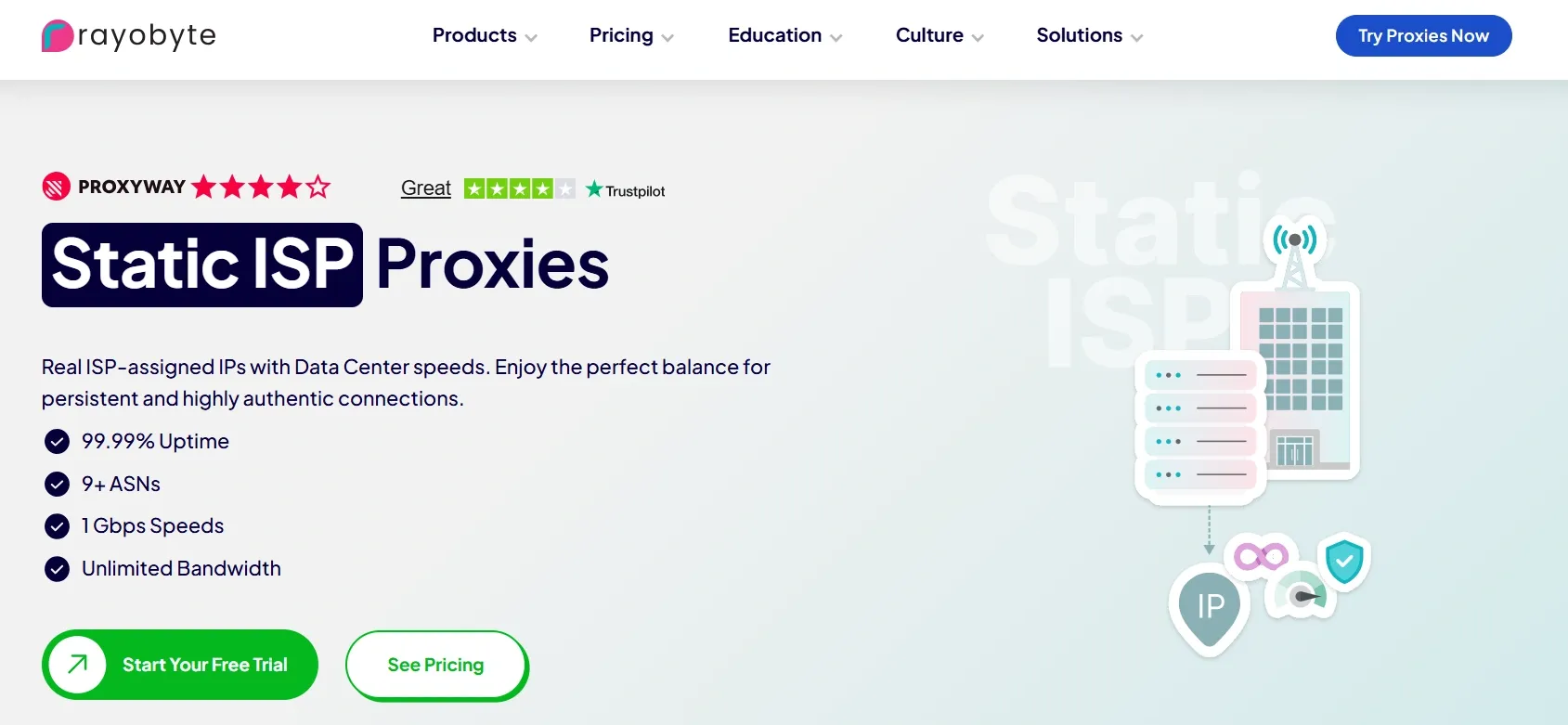
Rayobyte offers dedicated datacenter and ISP proxies with no limit on threads, traffic, or domains. It gives you a 2-day free trial so that you can test the proxies before you actually buy them.
It supports HTTP and SOCKS5 protocols with the geo-coverage of 25+ countries for datacenter proxies and 6 countries for ISP proxies.
Pricing:
Dedicated datacenter IPs cost $2.5/IP for a minimum of five IPs. ISP proxies cost $5/IP for a minimum of five IPs. Discounts apply to larger and longer-term plans.
Pros:
- Free trial includes 5 proxies for 2 days
- IPs are spread around 20,000 C-class subnets and hence are less likely to get mass-banned
Cons:
- Proxies are a bit expensive
- The dashboard is not very convenient to use
Public reviews say that the Rayobyte proxy's success rate (G2) is good, and there are mixed reviews about the support team.
How To Choose Private Proxies?
With a lot of private proxy services available in the market, here are the criteria you can use to evaluate a proxy service before buying:
- Success and block rate: If a proxy connects successfully, that does not mean that it will have a good success rate on your target as well. Inquire about the success rate data on your specific target before you buy. Some proxy providers provide a list of blocked targets on their website. Check that to see if your target is listed there. Also, test it yourself using a proxy tester tool like Byteful’s during the trial period to make sure it actually works for you.
- Speed under load: Latency numbers listed on a provider’s dashboard are measured under ideal conditions. Real numbers appear when you are running multiple concurrent requests. A proxy service that is fast for a single request but fails under load will not be a good choice, so make sure to stress test before buying a plan.
- Protocols and authentication: Does the proxy service you are considering support the protocols you need and the authentication mechanism you prefer? You can get this information easily from the provider’s website, so make sure the provider provides what you need before making the buying decision.
- Locations and city targeting: If your use case requires proxies from a specific geo-location, ensure that the proxy provider covers that specific location with their private proxies. If you want to target a specific city, see if the provider supports city-level targeting. You can get this information from the provider’s website.
- Rotation and sessions: Understand the rotating logic before you buy. Can you rotate the IPs per request or after a specific duration? What you need depends on your use case, so make sure that the provider supports what you require. You can get this information from the provider’s dashboard.
- Ethical sourcing: Look into the details of how the proxy provider sources their IP addresses. The way the IPs are sourced matters because it plays an important role in the reputation of the IPs. IPs that are not ethically sourced will probably have a bad reputation and hence be more prone to being blocked on several targets. To verify this, use the trial IPs and run them through a reputation database like IPQualityScore. A high fraud score signals an IP abuse history, which often traces back to poor sourcing practices.
- Dashboard and API: If a proxy provider supports everything you need but their dashboard is too complicated to use, then buying from them is probably not a great decision. Features and support matter, but so does the ease of access and usage. API access is also essential if you need to integrate proxies into automated workflows. Test both of these things during the trial period so you can make an informed decision.
How To Test Private Proxies Before You Buy
It is crucial to test proxy IPs before buying to make sure that they will fulfill your needs. There are many tools available online that can help you with that. A combined usage of these tools can provide a more complete picture of an IP’s quality, reputation, and speed.
Proxy Tester
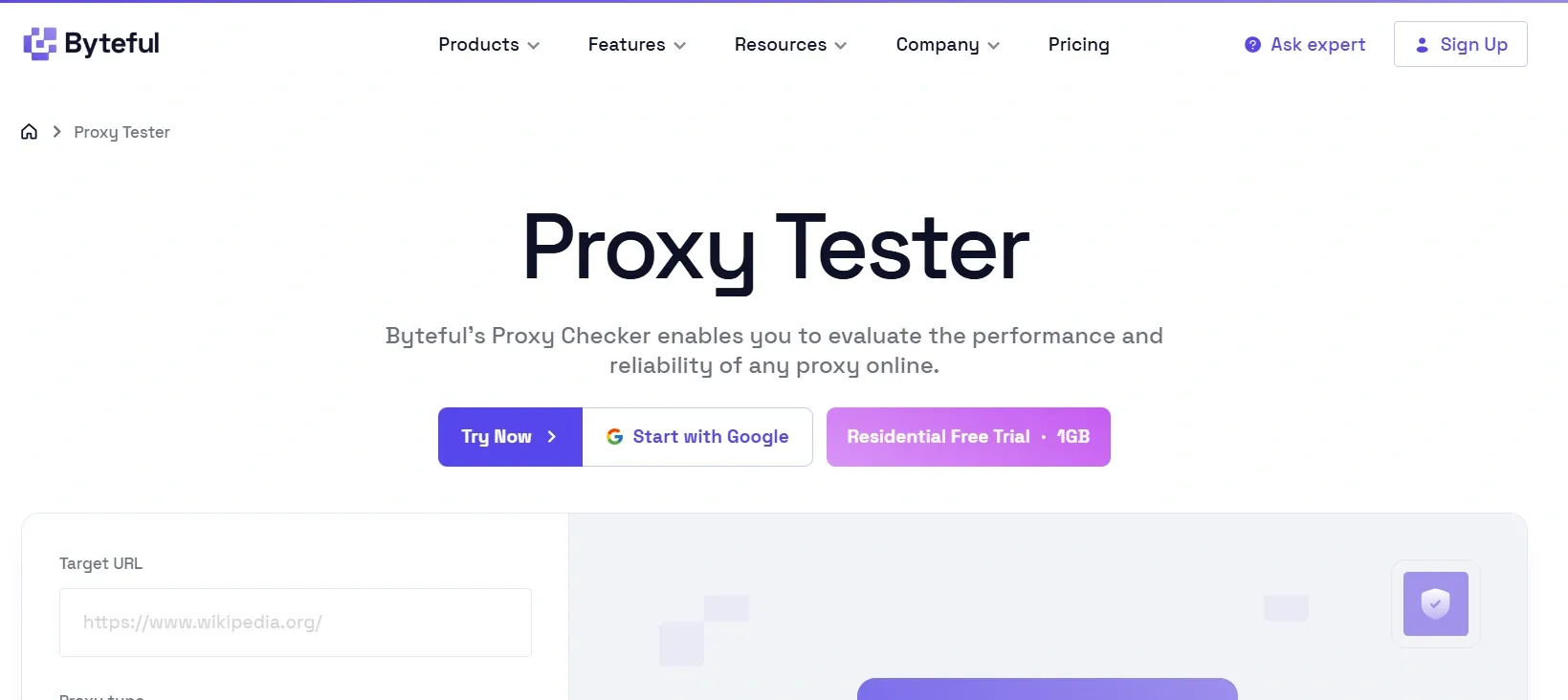
Start with a proxy tester tool like Byteful’s free proxy tester. It shows you the location of the proxy IP, the lowest latency, and confirms if the request goes through successfully.
If your private proxy is static, then multiple checks on the same proxy should return the same IP address. If the tests show a different IP every time, then that is a strong indicator that the IP is not really exclusive and is part of a shared pool.
Blacklist Checkers
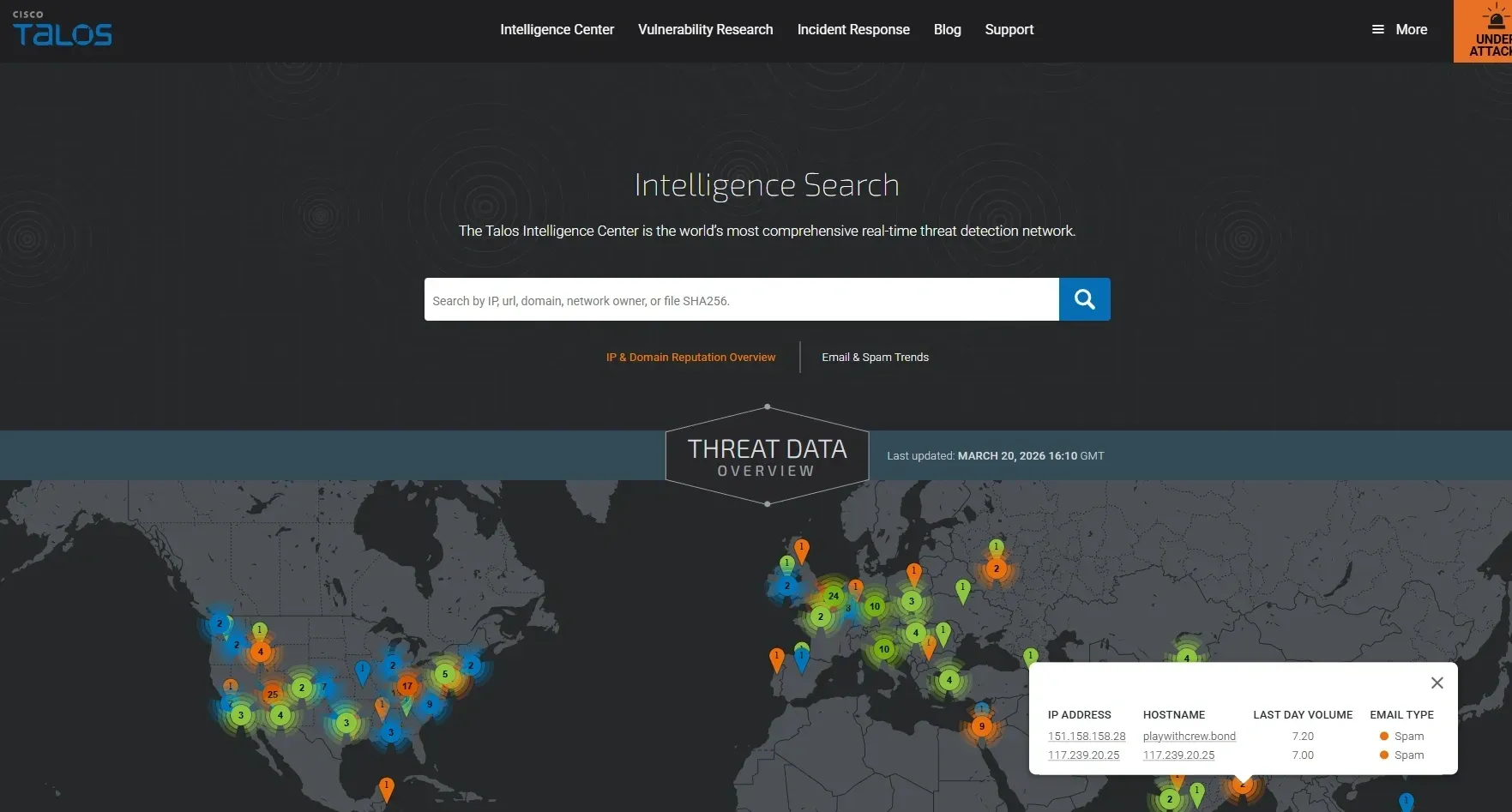
Checking if an IP is listed on any major DNS-based blacklists is important, as these include IP addresses and domain names known for spam or linked to any suspicious activities. Blacklist checker tools like CISCO Talos can scan an IP across multiple blocklists. These tools also provide a quick overview of any issues with the IP, if there are any.
Fraud and Abuse Score Tools
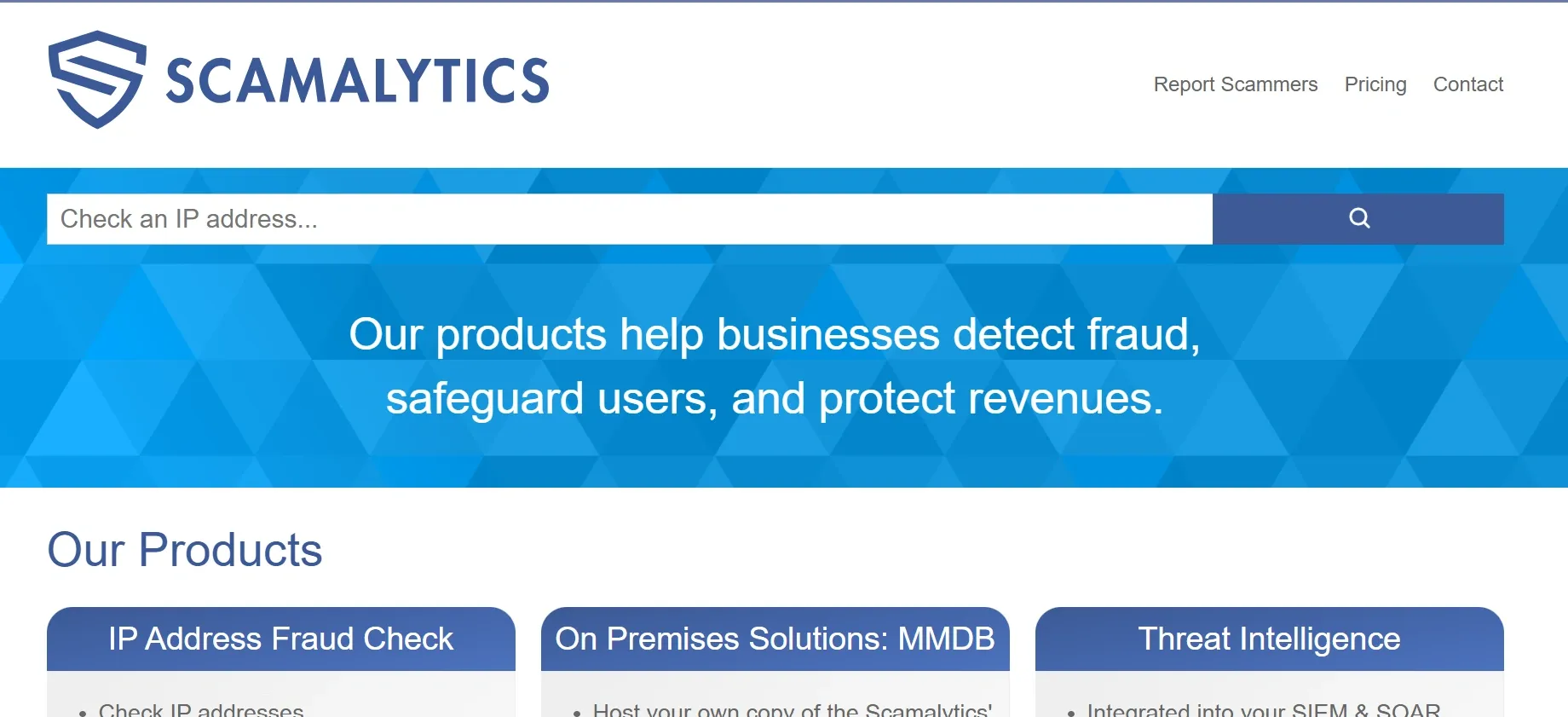
These tools, like Scamalytics, offer a more detailed IP reputation check. They verify an IP's recent history for signs of fraud or bot activity. Then they give your IP a score from 0 to 100. A high fraud score indicates that the IP is already flagged on some targets, and no amount of rotation can fix an IP with a bad reputation.
Private vs Free Proxies
Free proxies may seem like a cost-saving option when compared with private proxies, but they come with their own trade-offs.
- No exclusivity: Free proxies are available for everyone and are shared by many users. So, unlike private proxies, you have no control over who is using the same IP as you and what they are doing with it.
- Poor IP reputation: Free proxy IPs are overused and usually flagged on most targets, which makes them not a very useful choice for most use cases.
- Unpredictable performance: Free proxies have no uptime guarantees. They have inconsistent speeds and can go offline at any second without warning.
- Not a trial substitute: Free proxies are not the same as a free trial from a reputable proxy provider. If you want to test a private proxy before committing, use a trial service from a reputable proxy provider.
