Country-level targeting should be the default since it allows good diversity within the pools for IP rotation. This is also enough to check a website's overall functionality and make country-specific changes. It also works with standard web scraping workflows, where the target website treats entire countries as single markets.
That said, city targeting has its own place in market research and web scraping, despite comparatively smaller pool sizes. Search engine optimization (SEO), for example, works quite differently based on the local IP, which is why SEO teams collect results through SERP proxies. Local places (maps), products, ads, organic rankings, and other SERP elements can also change based on city-level IPs.
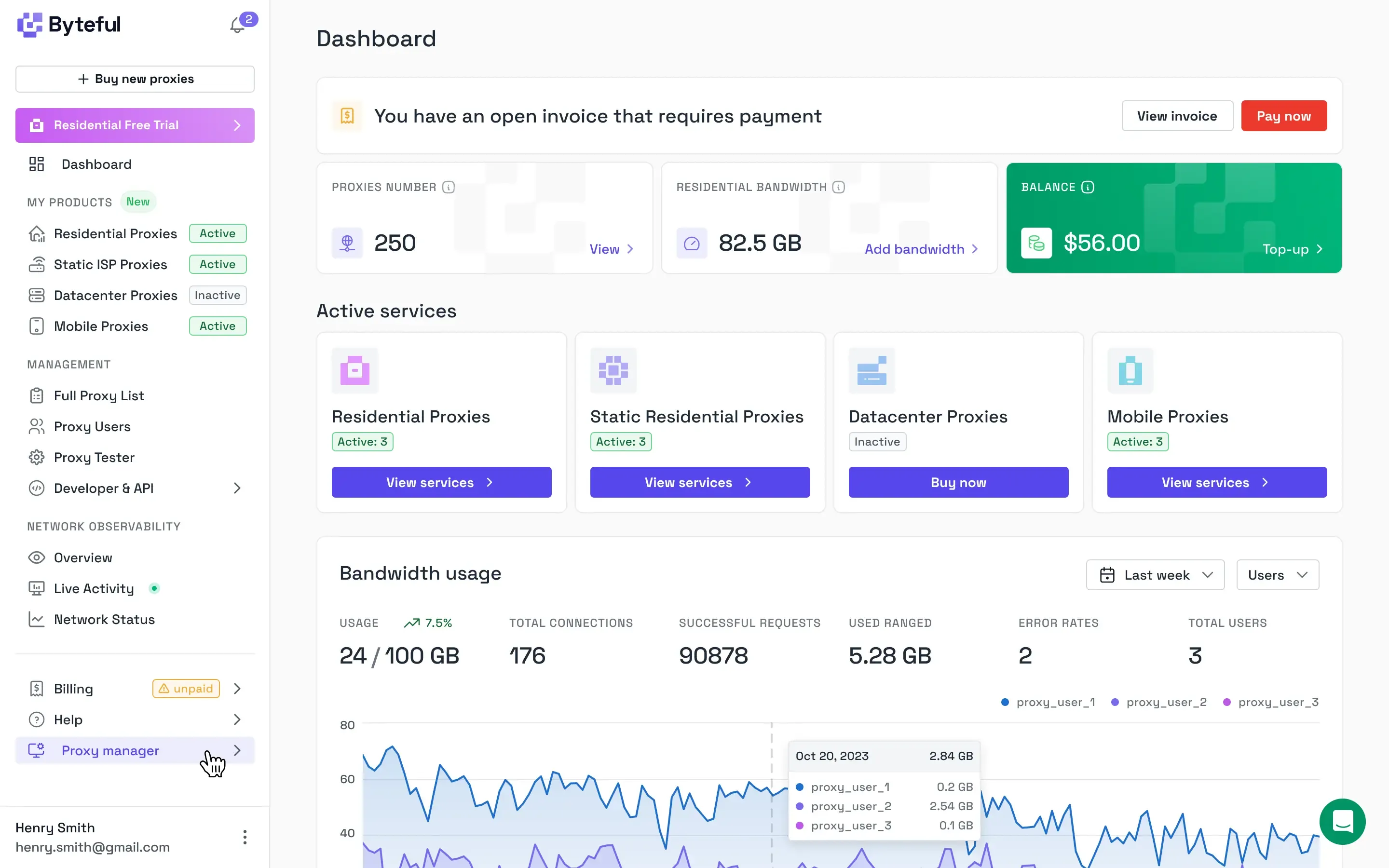
As mentioned, city-based geotargeting will leave you with fewer IPs. With Byteful, however, that's easy to manage since you can check the number of available IPs per geo-targeting parameter in the dashboard before generating your proxy list.



 Residential Proxies